
Regulating the Nervous System Through Somatic Healing and Mindfulness
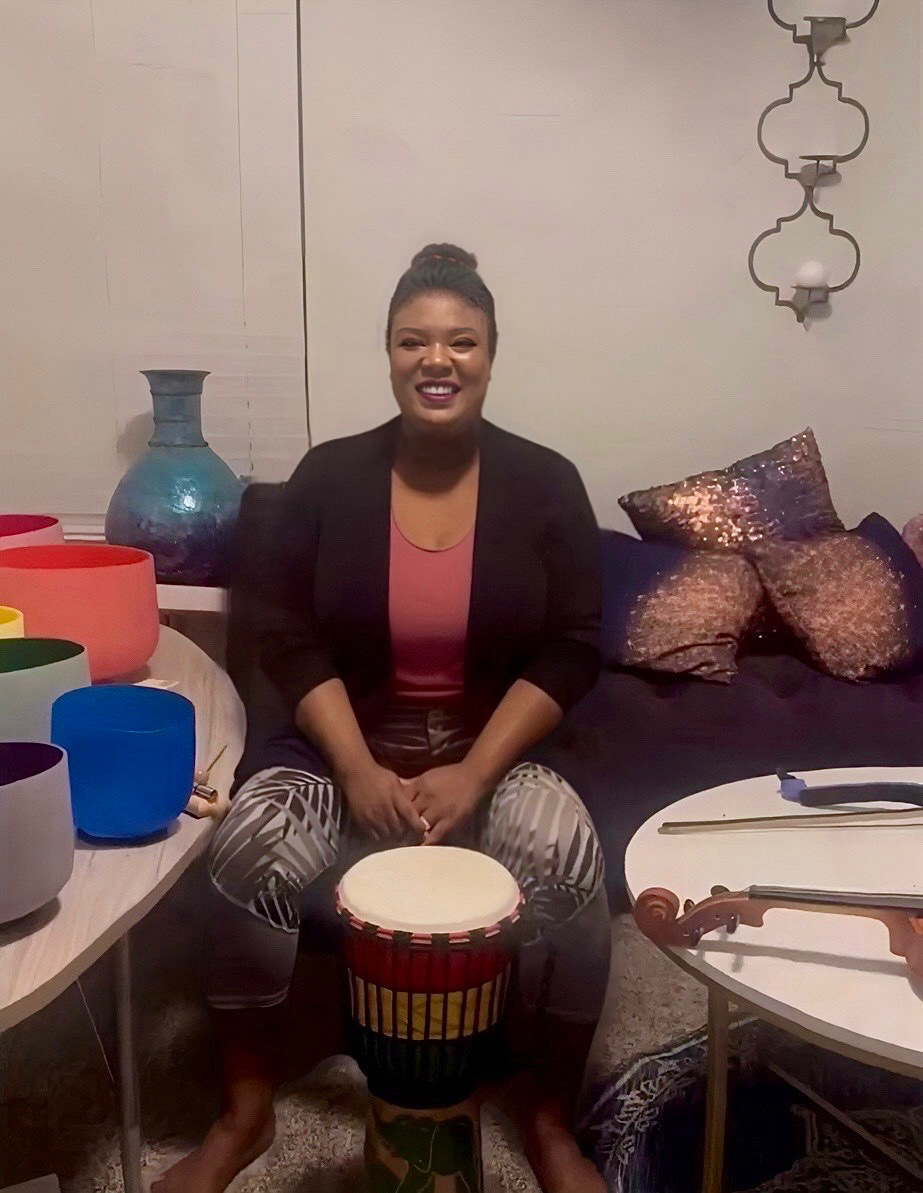
If you’ve never read The Body Keeps the Score by Dr. Bessel van der Kolk, I recommend it. The body has an internalized map that reflects the stress and trauma each person has endured, along with the storage of memories within the brain. Today I’ll be discussing somatic practices and why they are so powerful in trauma work. The root word in somatic is “soma,” which means the body in wholeness. Therefore, somatic healing integrates the mind, body, and spirit connection, or what somatic practitioners often refer to as embodiment. Integrating somatic practices into trauma work gently reconnects those I am working with back to their bodies, promotes emotional regulation, and facilitates empowerment. Instead of focusing solely on thoughts and verbal processing, in my sessions the work we do invites awareness of breath, sensation, movement, and nervous system responses as pathways toward healing.

How I Integrate Somatic Healing in My Practice
I use a trauma-informed yoga approach that emphasizes safety, embodiment, nervous system awareness, and gentle reconnection to the body.
Instead of pushing the body or forcing emotional release, each movement is open to choice, agency, and awareness. This means that as we work, movement is completely optional. Stillness is also welcome. Breath, something that has been with us since birth, becomes a tool for regulation rather than something to control.
Through this integrated lens, I support clients in:
Understanding their nervous system responses, such as fight, flight, freeze, or shutdown
Using intentional breath patterns to reduce hyperarousal
Noticing physical sensations without judgment
Gently releasing stored tension through subtle, trauma-informed movement
Rebuilding a sense of safety within the body to strengthen presence and rebuild tolerance and self-compassion
Creativity is also woven into this somatic work. Along with mindful awareness, breath, and movement, I guide each participant through reflective expression, grounding imagery, or sensory-based practices to support embodiment and attunement. Somatic healing is practical, sustainable, and empowering, and the great news is that it can be done anywhere, whether you are switching locations or feel more comfortable in a chair or on a bed instead of the floor. If you share a scenario with me, there is a somatic method to support that experience.
Who Can Benefit from Somatic Healing?
If you are seeking deeper healing that enhances the connection between mind and body, I recommend exploring somatic healing. I often see this approach resonate most with individuals who feel disconnected from their bodies or overwhelmed by their nervous system responses.
This approach may be especially supportive for those who:
Have experienced trauma or chronic stress
Feel stuck in patterns of anxiety, hypervigilance, or shutdown
Notice physical tension that does not seem to resolve
Struggle with racing thoughts or difficulty feeling grounded
Have plateaued in traditional talk therapy
Desire a more embodied, regulation-focused approach to healing
Although talk therapy explores thoughts, behaviors, and emotions, somatic work shifts those who are engaged from feeling potentially stuck or retraumatized into gentle shifts of focus and presence. Rather than overriding the body’s response, we begin listening to the body’s internal tune. Instead of fighting the stress response, we build capacity to regulate it.
For those who are highly sensitive, navigating burnout, or adjusting to major life transitions, somatic healing offers a practical and sustainable way to rebuild safety from the inside out.
Integrating Somatic Practices into Daily Life
Before reading further, I invite you to participate in a somatic activity called “A Moment of Stillness.” Pause with me for a moment. You can do this brief exercise lying down, sitting in a chair, sitting on the floor or a mat, in your car, anywhere really.
If it feels comfortable, close your eyes or soften your gaze by fixing it gently on a spot that feels safe. Take three deep breaths in through your nose, as if you are smelling roses, and exhale slowly through your mouth, as if blowing out candles.
Now, begin to tune inward. Gently scan your body from the top of your head down to the soles of your feet. Notice any tension around the forehead, eyebrows, or eyes. Observe the jaw, is there tightness? Bring awareness to the neck and shoulders. Notice any strain in the chest. Sense into the back, hips, and lower extremities.
Pay attention to subtle sensations. Do you notice warmth or coolness? Tingling? Heaviness? Lightness?
Simply observe without judgment.
Even this brief pause gives your nervous system an opportunity to shift. In just a few minutes, you may have noticed a moment of clarity, a softening of tension, or a slight slowing of thoughts. These small, intentional pauses begin the process of regulation.
Write it down. Write what you noticed and name the sensations, tension points, temperature changes, or other experiences that came up during that brief moment of stillness.
This is one example of how somatic healing can be integrated into daily life. Regulation does not require an hour-long session. It can begin with breath, awareness, and gentle presence. Over time, these moments of tuning in build capacity. The body learns that safety is available in the present moment.
Conclusion
If you are navigating trauma, somatic healing allows you to take back your power by supporting a nervous system that has likely been overwhelmed for years. Whether you are navigating trauma, burnout, anxiety, or simply feeling disconnected, somatic healing offers a grounded pathway back to safety within yourself.
If you live in the State of Texas and are seeking an integrative trauma approach that includes somatic healing, I would be honored to walk alongside you. If you are outside of Texas, my mindful art and movement workshops provide an opportunity to explore embodied practices in a supportive and intentional setting.
As a therapeutic reminder, healing does not require force. It requires safety, pacing, and presence.


Comments